
Journal
Laurel soap of Aleppo: the complete heritage guide
The full methodology of the Aleppo soap craft — the curing season, the nine stages, the stamp, and the golden transformation.
This guide accompanies our official company film and completes what the moving image cannot hold: the inherited methodology of the Aleppo soap craft, stage by stage, from the olive grove to the golden aged block.
A glimpse of history
Hardly any record of soap in the world is without the name of Aleppo. Laurel soap of Aleppo is considered the oldest known hard soap in history, made by the hands of Aleppo’s artisans for thousands of years according to many historical accounts, inherited by families of the craft father to son until it became the city’s signature on the map of world crafts. And through the old trade routes the secrets of the recipe travelled west, inspiring European soapmaking — most famously the soap of Marseille — while Aleppo remained the original source and the true reference.
Today, in the vaulted stone soap houses, the same story is still told with its four simple ingredients: olive oil, laurel oil, water and lye — and a fifth element no scale can measure: patience.
The treasures of nature in one bar
Olive oil: the foundation and the soul — rich in vitamins A, E and K, antioxidants and nourishing fatty acids; it gives the soap its creamy lather and unique mildness, and moisturizes and feeds the skin deeply.
Natural laurel oil: the secret of the Aleppo character — a precious aromatic oil pressed from laurel leaves, known for its purifying and cleansing character, giving the soap its fragrant scent and its gentle care for the skin and scalp.
Water carries the reaction; and the alkali drives saponification — through careful boiling and long aging it transforms completely, leaving nothing behind in the mature bar.
And a gift of handmaking: the natural plant glycerin formed during saponification stays whole inside the bar — a precious moisturizer commercial factories extract and sell separately — giving the skin double softness with every use.
The result: a soap entirely free of synthetic fragrance and dyes, preservatives and parabens, and harsh sulfates.
The curing season
The craft has an annual rhythm governed by nature: the soapmaking season — which the artisans call the “evaporation season” — begins after the olive harvest, from late autumn through winter into early spring, when fresh oil provides the raw material and the cold weather lets the hot paste set and dry gradually.
The nine inherited stages
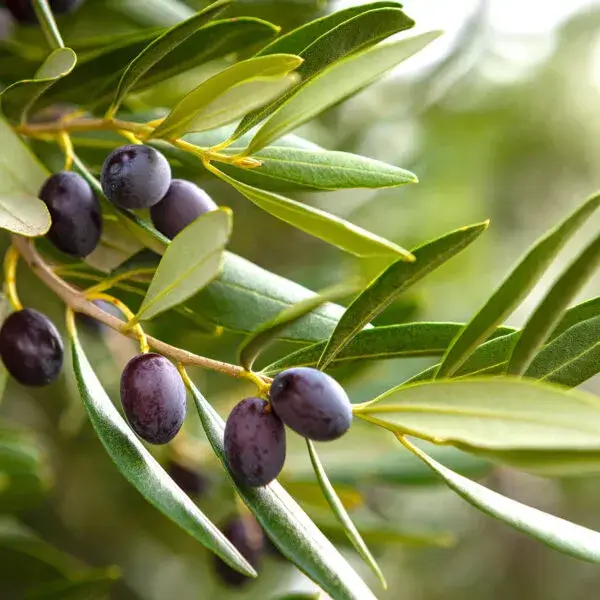
1. Hand picking: the harvest is picked by hand, fruit by fruit, protecting it from bruises that raise the oil’s acidity — fine soap is not born in the cauldron, but on the branch.
2. Pressing: fresh fruit goes straight to the presses; the first cold press keeps the vitamins and antioxidants that will later live inside every bar.
3. Hand boiling: pure olive oil is boiled gently for days in the great cauldrons, stirred constantly with long wooden paddles under the master’s eye, who reads the texture with generations of experience.
4. Laurel at the golden moment: aromatic laurel oil is added in the final minutes of the boil — long heat would strip its aromatic compounds; a precision inherited from master to apprentice.
5. Pouring and spreading: the hot paste is poured over waxed paper, spread evenly, and worked with wooden boards — a folkloric scene inherited for centuries.
6. Cutting by the master’s hand: the set paste is cut by hand with blade and wooden ruler into equal squares — a skill beyond any machine.
7. The stamp — a signature of authenticity: every block is stamped with the maker’s mark; the stamp became a certificate of origin and identity.
8. Aging in the domed soap houses: the blocks are stacked in airy stone vaults and aged six to nine months, sometimes a full year.
9. Ripening — from green to gold: the outer surface turns from olive green to amber gold while the heart stays olive green — a natural signature no dye can imitate.
Laurel ratios — a guidance note
Laurel soaps are commonly graded by the share of laurel oil; each ratio suits a different use. Our two published formats follow the current approved labels.
Why choose the natural?
Gentleness and safety in a short, understandable ingredient list; complete plant glycerin; fully biodegradable; one bar that lasts weeks and can replace several products; and a human economy — every bar supports olive farms, a press worker and a soap house master.
For the skin and the hair
Deep yet gentle cleansing; the purifying character of laurel oil; exceptional kindness to sensitive and dry skin; self-moisturizing glycerin and vitamin E; antioxidant support — and for the hair: a complete natural soap that feeds the roots and helps the scalp keep its natural balance.
How to recognize the authentic bar
The pulsing green heart under a golden surface; the clear natural scent of laurel; the stamped mark of the maker; a firm texture and a short, understandable ingredient list; and the inherited folk test — pure soap floats on water. Remember the golden rule: a product that needs nine months to age cannot have its soul imitated in hours.
Care and keeping
Let the bar dry between uses on a well-drained dish; lather well for the hair and rinse thoroughly; split a bar in two — one for the sink and one for the bath; and store spare bars dry — Aleppo soap is like perfume: it only gets better with age.